For many of us, deciding what to wear each morning is barely a decision at all. A glance out the window, a check of the temperature, maybe a jacket by the door just in case. It’s automatic.
Now imagine making that same call every morning without the instinct for it. Without an easy read on what “cold” or “too warm” actually means for your body, or knowing what to wear to deal with it. For adults with intellectual and developmental disabilities, that’s not a small gap. It’s a daily decision that affects comfort, safety, and how much of the day they can move through on their own terms.
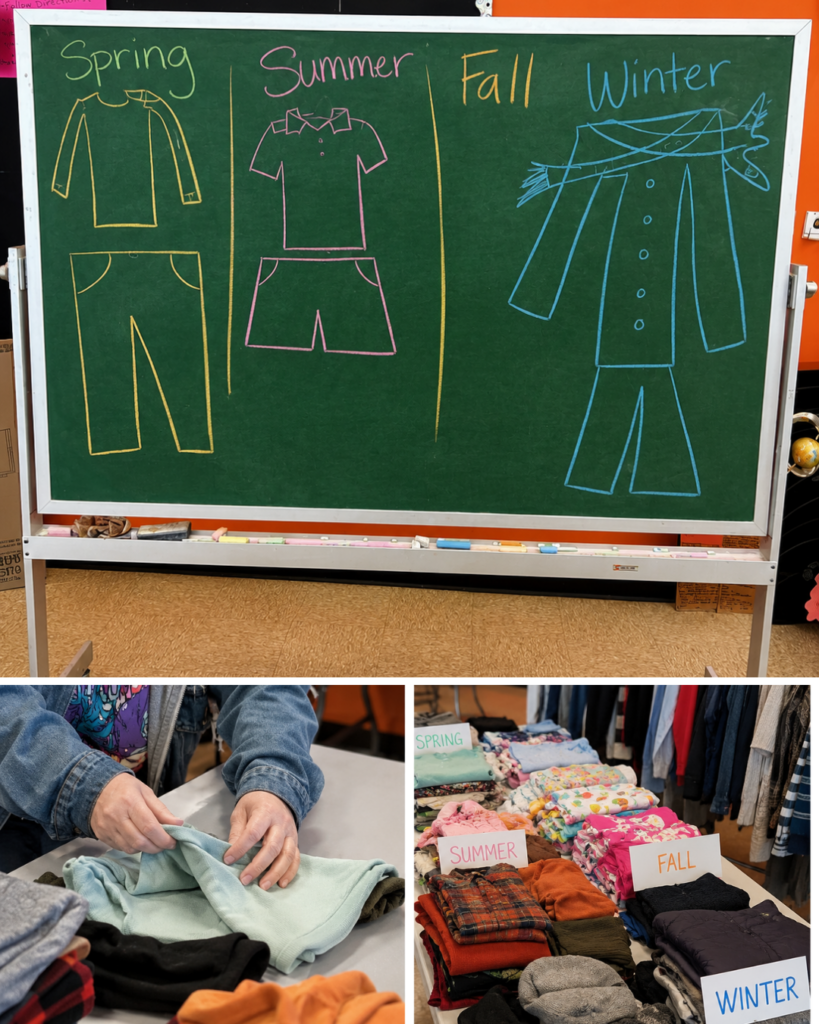
At Magdala House’s Adult Day Program in St. Louis, that gap became the lesson. Participants brought clothing from home and worked through it together: what goes with a summer day, what a winter morning actually calls for, why a light shirt that feels fine indoors won’t hold up outside in January. Some modeled short sleeves and lightweight layers. Others pulled out jackets, sweaters, winter coats. They talked through the reasoning as they went, not just what to wear but why, connecting the clothes in their own closets to the weather they’ll actually face.
That’s the part that matters most. This wasn’t a general lesson about the four seasons. It was practice with their own things, skills they can walk straight out the door and use at home or in their St. Louis neighborhood, no translation required.
It’s easy to take dressing for granted when it’s never required real thought. But for the adults Magdala House serves, it often takes instruction, repetition, and real practice before it becomes second nature. And when it does, the payoff runs deeper than getting dressed. It’s fewer mornings spent stuck on a decision. It’s staying safe through a heat wave or a cold snap. It’s the quiet confidence of handling something yourself, start to finish, without needing someone else to make the call.
None of that happens in one lesson. Independence rarely does. It’s built the way most real skills are, one attempt at a time, one lesson stacked on the last, until a decision that used to be hard becomes just another normal part of the day.
That’s the work at Magdala House in St. Louis, whether it’s choosing the right coat for the weather, learning to cook a meal, or finding the words to communicate more clearly. None of it is flashy. All of it adds up to something that matters: adults with intellectual and developmental disabilities who get to make more of their own decisions, and who get to live with the dignity that comes from making them.
Your gift to Magdala House helps adults with intellectual and developmental disabilities in St. Louis keep building skills like this one, one lesson at a time.
Donate today and help someone take the next step toward independence.